Seattle is a city of distinct neighborhoods split by water and hills, and each one has its own main street, market and park. The quickest way to feel at home is to pick one, learn its rhythms and become a regular somewhere: the Sunday market, a Saturday run, a weeknight class.
This guide covers both halves of settling in: the practical errands (transit, trash rules, your license, a library card) and the social part, where newcomers actually meet people. We checked fares, rules and deadlines against official sources and linked them, so you can confirm the details before you act.
Updated November 2026
Pick your neighborhood
Ballard
Dense and walkable at its core, with restaurants and bars along historic Ballard Avenue NW, where the farmers market sets up every Sunday, year-round. Golden Gardens Park, on the northwest edge, has sandy beach and Olympic Mountains views. The trade-off: there’s no light rail here, so commuting downtown means the bus or a car.
Capitol Hill
The city at full volume: bars, music, coffee and late-night food, with Capitol Hill Station putting downtown and the airport a train ride away. Cal Anderson Park sits just southeast of the station, and the Capitol Hill farmers market runs Sundays all year. Great if you want to walk everywhere; less great if you need quiet weekend nights or easy parking.
Fremont
A compact, artsy neighborhood on the ship canal, easy to cover on foot. The Fremont Sunday Market runs every week, rain or shine, year-round, with around 200 booths of handmade goods, vintage finds and food trucks; in winter it moves to a covered, heated site. It suits people who like a small-village feel close to the middle of the city.
Queen Anne
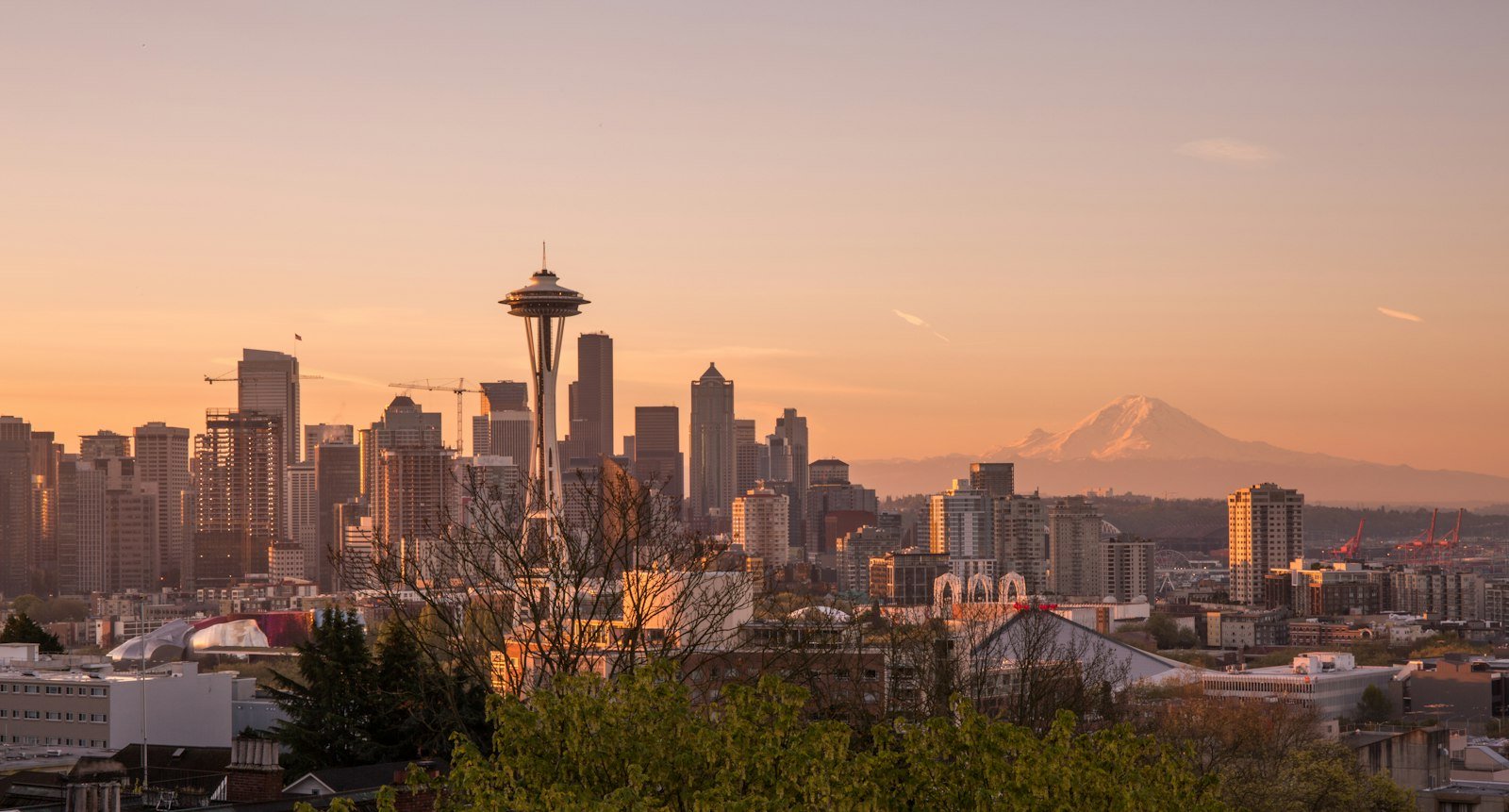
Upper Queen Anne feels like a hilltop small town; Uptown, at the base of the hill, puts you next to Seattle Center. Kerry Park has the postcard view over Elliott Bay and the Space Needle, with Mount Rainier when it’s clear. Know that the hill is steep, and Uptown streets fill up on event nights.
West Seattle
Across the Duwamish, it feels like its own beach town. Alki Beach runs about two and a half miles with a wide path for walking, running and biking, and views across Puget Sound to the Olympics. There’s no light rail yet, but the King County Water Taxi crosses to downtown in 10 to 15 minutes, and the West Seattle farmers market is open Sundays year-round.
Columbia City
A friendly Southeast Seattle main street with its own Link station, so downtown and the airport are both a straight shot. The Wednesday farmers market runs from spring into fall. Nightlife is low-key, which is the point for a lot of people who live here.
Georgetown
Brick buildings, studios and bars tucked into the industrial south end. Oxbow Park holds Hat ‘n’ Boots, a 44-foot cowboy hat and giant boots that started life as a 1953 gas station. It has real character, but it’s surrounded by industry, so it fits people who’d rather have grit than greenery.
Pioneer Square
Seattle’s original neighborhood and a historic district, home to galleries and the First Thursday Art Walk. The ballpark and stadium sit just south, and Pioneer Square Station and the downtown ferry terminal are steps away. Expect big crowds on game days and much quieter streets on an ordinary weeknight.
Getting around
Link light rail
Sound Transit runs two Link lines. The 1 Line runs north to south from Lynnwood through Northgate, the U District, Capitol Hill, downtown, Columbia City and the airport to Federal Way. The 2 Line shares the tracks from Lynnwood to downtown, then crosses Lake Washington on the I-90 floating bridge to Mercer Island, Bellevue and downtown Redmond. Trains come every 8 to 10 minutes most of the day.
Link has a flat fare: $3 for adults, $1 for seniors, riders with disabilities and ORCA LIFT, and free for anyone 18 and under. See Sound Transit fares.
ORCA card
One card covers Link, King County Metro, Sounder, the water taxi, Washington State Ferries and the other big regional systems. An adult card costs $3; youth and senior cards are free. Order one online or buy in person, then manage it in the myORCA app (Android users can add it to Google Wallet). You can also just tap a contactless bank card or phone wallet to pay an adult fare. Transfers on ORCA are good for two hours. Get an ORCA card · Reduced-fare options
Buses and RapidRide
King County Metro’s adult fare is $3, with $1 fares for seniors, riders with disabilities and ORCA LIFT, and free rides for youth. RapidRide lines A through H are Metro’s frequent routes: tap your ORCA at the station and board at any door. Metro fares · RapidRide
Ferries and the water taxi
Washington State Ferries leave Colman Dock (Pier 52) for Bainbridge Island, about 35 minutes, and Bremerton, about an hour. The King County Water Taxi runs from Pier 50 to West Seattle in 10 to 15 minutes and to Vashon Island in about 22, and youth 18 and under ride free. Ferry schedules · Water Taxi
Driving and parking
If you live near Link or a RapidRide line, you can go car-light; a car mostly earns its keep for mountain trips. Pay for street parking at pay stations or with the PayByPhone app, which is free to use in Seattle. Some neighborhoods are Restricted Parking Zones, where non-permit holders get only the posted time limit, so check the zone map before you sign a lease. And you can’t leave a car on the same block for more than 72 hours, sign or no sign. SDOT parking program
To and from the airport
Link reaches the airport in about 38 minutes from downtown. From baggage claim, go up to the fourth level and cross the skybridge to the parking garage, then follow the signs to the station; a free shuttle runs if you’d rather not walk. Port of Seattle Link guide
Weather and what to wear
Seattle’s reputation is about frequency, not volume. Sea-Tac averages about 39 inches of rain a year, but it arrives on roughly 156 days, mostly as drizzle between October and April. November is the wettest month and July the driest.
Summer is the payoff: average highs in July and August sit in the upper 70s, and the airport sees only a few 90-degree days a year. Winters are chilly rather than cold, with average lows in the upper 30s and about six inches of snow a year. Wildfire smoke season is typically July through September; the Washington Smoke Blog and AirNow show current air quality.
What to wear: a waterproof shell with a good hood, a fleece or light insulated layer underneath, and shoes that can handle wet sidewalks. Plenty of locals skip the umbrella. In summer, keep a layer handy for cool evenings by the water.
Everyday essentials
Library card
A Seattle Public Library card is free if you live, work, go to school or own property in Seattle, Bothell or most of King County. Apply online and you get instant access to e-books and online resources once your address is verified. Get a library card
Garbage, recycling and compost
Seattle takes sorting seriously. Food scraps, food-soiled paper and recyclables are all banned from the garbage by city code. At houses, garbage and compost go out every week and recycling every other week; apartments and condos may have different pickup. Look up your day, then use the “Where Does It Go?” tool when you’re unsure about an item. Collection day · Where Does It Go? · Food waste rules
Voter registration
Register online at VoteWA with a Washington license or ID (or the last four digits of your Social Security number). Online and mail registrations must arrive at least 8 days before an election; you can register in person until 8 p.m. on Election Day. King County mails a ballot to every registered voter about 20 days before each election, and you can return it by mail with no stamp or at a drop box by 8 p.m. on Election Day. Register to vote · King County Elections
Driver’s license and car registration
You have 30 days after moving to Washington to get a Washington driver’s license and register your vehicle, and you need the license before you can register. Driver licensing offices require an appointment. Adults with a valid license from another U.S. state generally don’t need to test. You’ll leave with a temporary license, and the permanent card arrives by mail. Get a WA license · Register your vehicle
Utilities
Seattle City Light (electricity) and Seattle Public Utilities (water, sewer and garbage) share one sign-up on the City’s Utility Services website, with a quick online identity check; if it can’t verify you, you’ll need to visit a walk-in center with photo ID. Renters: many property managers set this up for you, so ask first. Gas-heated homes are served by Puget Sound Energy, a separate account. New to the area · Puget Sound Energy
Meeting people
Community centers and rec leagues
Seattle Parks and Recreation runs 26 community centers with free and low-cost classes and drop-in programs, plus adult softball, flag football and pickleball. Find a community center · Adult sports
For a social league, Underdog Sports Leagues runs 21+ kickball, volleyball, flag football, pickleball and more, and you can sign up solo and get placed on a team.
Run, hike and get outside
The Seattle Green Lake Running Group has thousands of members and several runs a week, including Saturday routes that welcome all paces. Seattle Frontrunners is a running and walking club for LGBTQIA+ people and allies; anyone can try a few weekly runs before joining.
The Mountaineers, based at its Seattle Program Center in Magnuson Park, teaches climbing, scrambling, navigation and more, and courses are a classic way to make hiking friends. Washington Trails Association work parties need no experience: bring boots, gloves and lunch, and a crew leader shows you the rest.
Volunteer
Giving a regular shift is one of the fastest ways to know a neighborhood. Browse local organizations that need hands on our Get Involved page.
Markets and events
Seattle Neighborhood Farmers Markets run year-round in the University District (Saturdays), West Seattle and Capitol Hill (Sundays), with seasonal markets around the city. Market schedules · Ballard Farmers Market · Fremont Sunday Market
Pioneer Square’s First Thursday Art Walk is an easy monthly ritual. Pioneer Square events. For what’s on this week, see our events calendar.
Make something
Pratt Fine Arts Center on South Main Street teaches glass, jewelry and metalsmithing, blacksmithing, printmaking and more across 14 studios, plus studio access programs. The Center for Wooden Boats in South Lake Union offers boatbuilding classes, sailing programs, a Sunday Public Sail and volunteer roles, and admission is always free.
Local know-how
- Bring a bag. Single-use plastic carryout bags are banned statewide, and stores charge at least 8 cents for a large paper bag.
- Sunday parking is free. City pay stations don’t charge on Sundays and holidays, except during events in Uptown.
- Move your car every 72 hours. It applies on every city street, posted or not, and can end in a tow.
- Take the ferry for no reason. The walk-on crossing to Bainbridge Island is about 35 minutes each way, and you can pay with ORCA.
- Plan big outdoor trips for July through September. They’re the driest months, though smoke can roll in some summers.
- Beach fires are a summer ritual. Golden Gardens has first-come fire pits during its summer season, unless a burn ban is on.
- Repeat yourself. People here can seem reserved at first. The same class, run or market stall every week turns faces into friends faster than a one-off event.
Just moved and building something here? Tell us your story.